
Learning that’s hands-on.
Walk into our studio on any given morning, and you will observe that learning here is never something that happens passively from a desk. It is tactile, vibrant, and deeply interconnected across every subject we touch.
We kicked off the week in literacy by diving into the world of apples through a text by Gail Gibbons. As we read, our students made a fascinating discovery about nonfiction formats: detailed, thoughtful illustrations can teach real-world facts just as powerfully as photographs. We worked together to pull out main ideas and supporting details, which the kids immediately used as a scaffold to structure their own informative writing.
Later, we shifted gears to tackle narrative storytelling by introducing the concept of a "Small Moment." To help them grasp the idea, we compared a Big Moment—like spending an entire day at an amusement park—to a Small Moment, like that exact split-second feeling in your stomach as you plunge down the first giant drop of a rollercoaster. By zooming in on a single slice of time, our young authors are learning to build immersive descriptions. Over the coming weeks, they will be honing concise paragraphs, strong hooks, and smooth transitions to "create a movie" right in the reader’s mind.
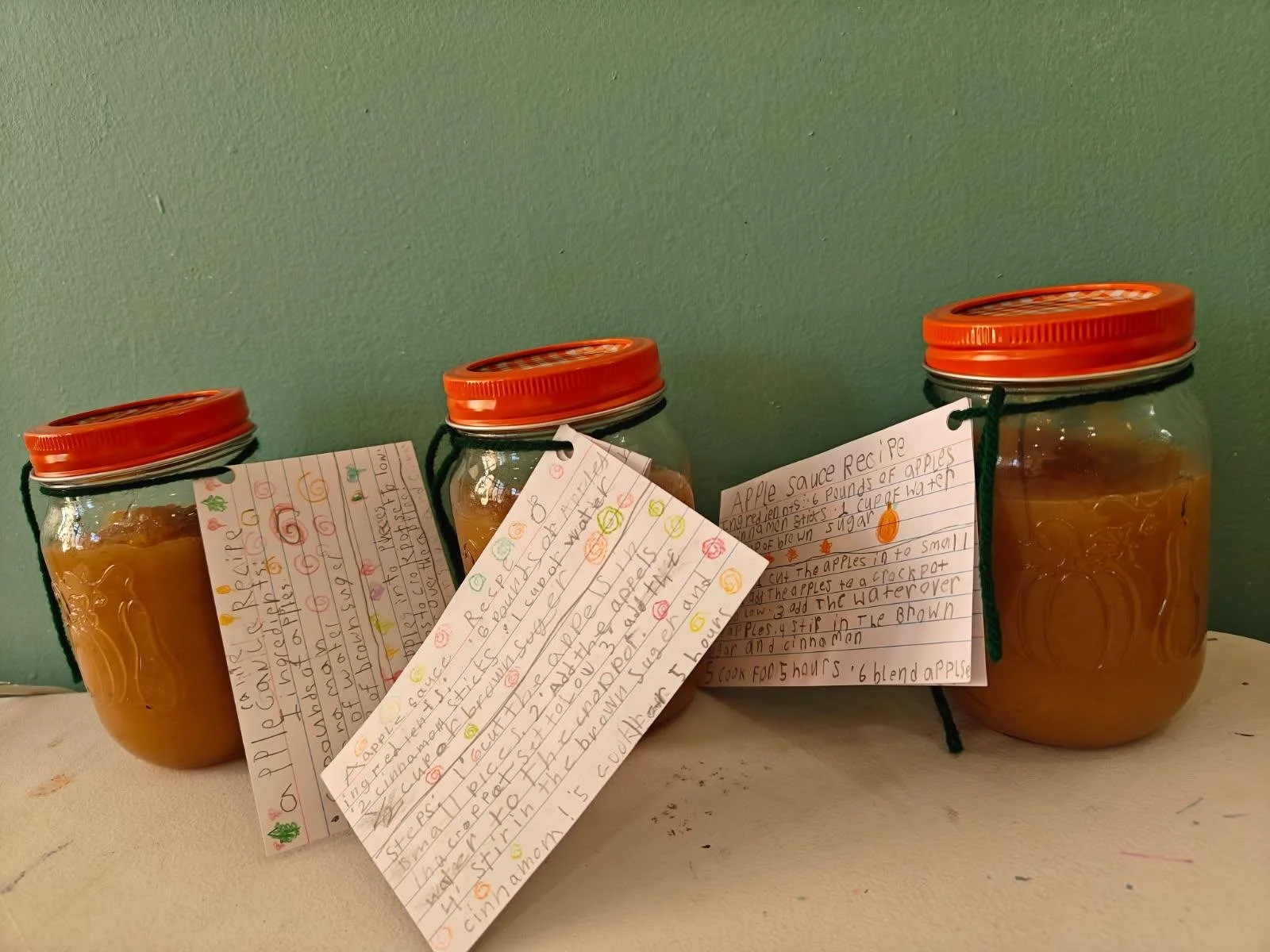
By mid-week, abstract math transformed into culinary science as the warm, comforting scent of homemade applesauce filled the studio.
Cooking is one of our favorite ways to make math feel real. As students chopped, seasoned, and stirred, they actively measured ingredients using quarters, halves, and wholes—turning fraction theory into a hands-on (and delicious) experience. To cap off the lesson, everyone translated their procedural steps into custom recipe cards to take home and share with family.
Our ongoing journey across the United States took us through both the Southeast and Southwest this week. We explored how climate and terrain shape daily life—contrasting the high humidity of the Southeast with the arid heat of the Southwest, while marveling at natural and engineering wonders like the Grand Canyon and Hoover Dam.
To bring these regions to life, we held a regional tasting session featuring Southern sweet tea alongside Southwestern chips and guacamole. Experiencing new cultures through food always sparks incredible conversations, not to mention a few hilarious expressions as students discovered brand-new flavor preferences!
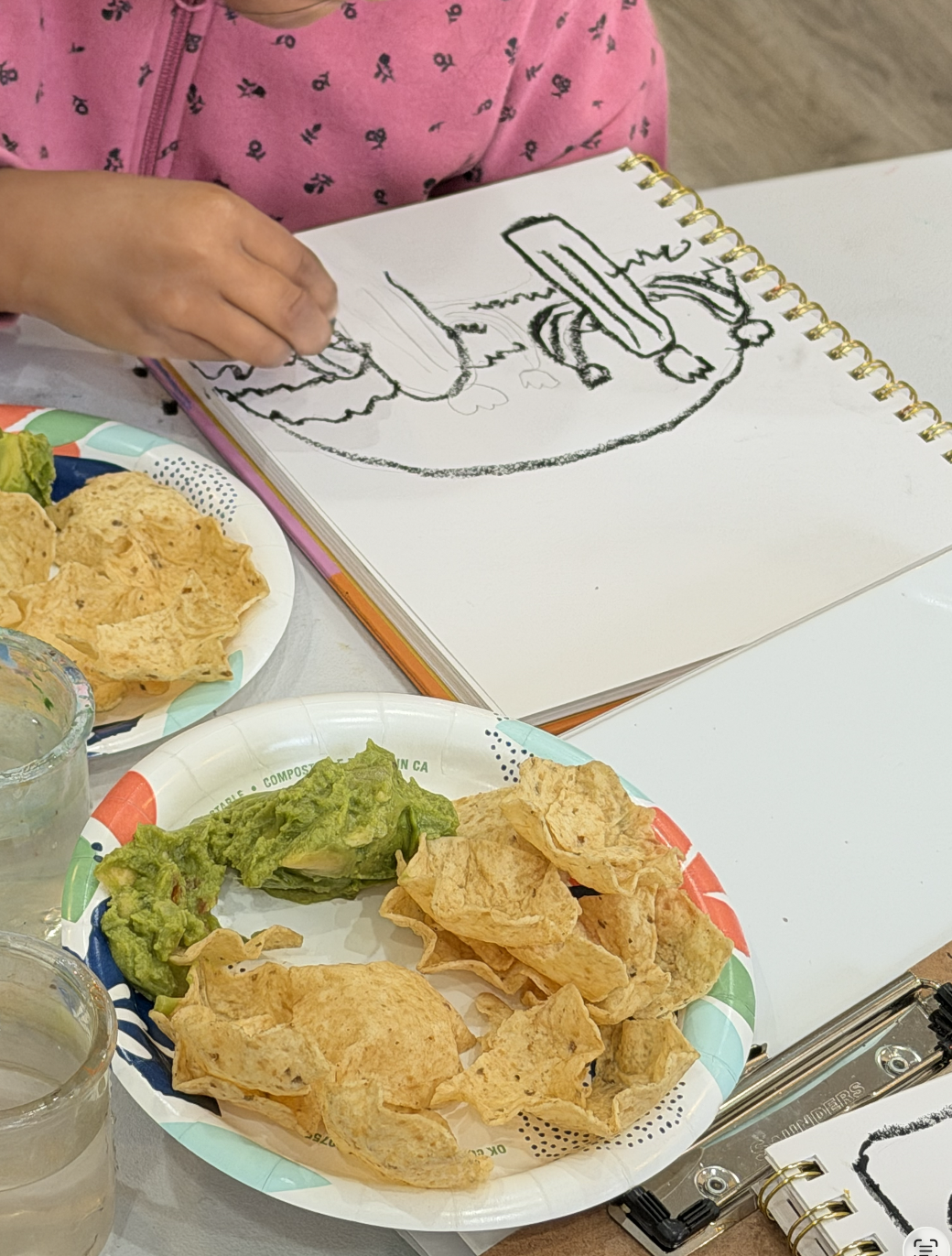
In the art studio, creativity naturally tied back into our regional studies. Students explored color order with "Color Theory Snails" and painted Southwest landscapes. For our cactus paintings, we introduced warm and cool palette concepts, but left the final choices entirely open—giving students complete freedom to paint with whatever colors spoke to them.
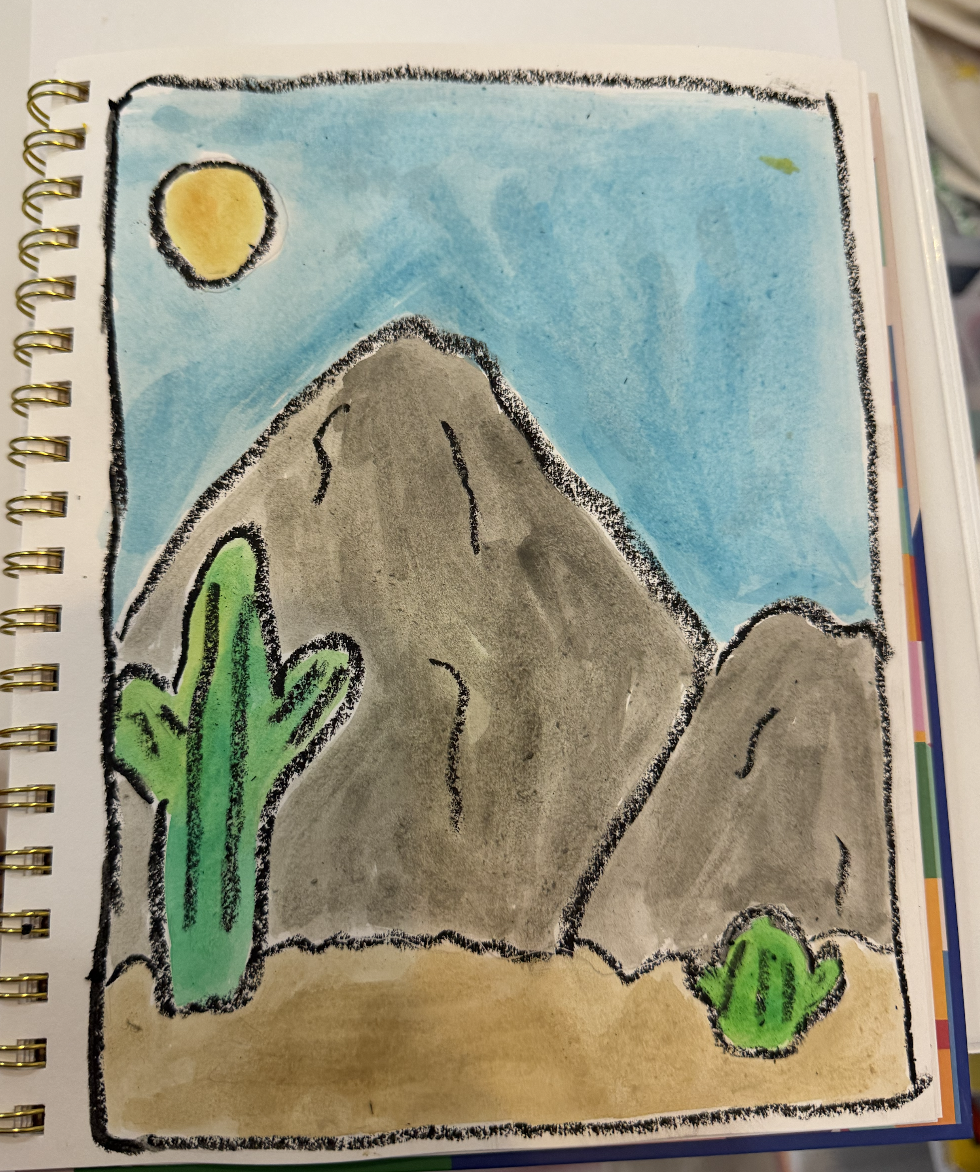
Of course, creative freedom often brings a bit of vulnerability. While our learners are endlessly supportive of each other, they can sometimes be their own harshest critics. We use these art sessions as a safe haven to talk openly about perfectionism.
We reminded each other that "perfect" simply doesn't exist in art, leaning into the old truth that perfect is the enemy of good. By letting go of the need for an flawless outcome, our students discovered that clinging to perfectionism only keeps us from making—and experiencing—truly wonderful things.